Foam-Based System
Fluorine-free foam (F3) for hydrocarbon liquid fires. Effective smothering to prevent re-ignition on mining and heavy equipment.

Find answers to the most common questions about fire suppression systems: how they work, which system you need for your equipment, installation, maintenance, compliance and costs. If your question is not covered here, contact MusterFire or your nearest authorised distributor directly.
Contact MusterFire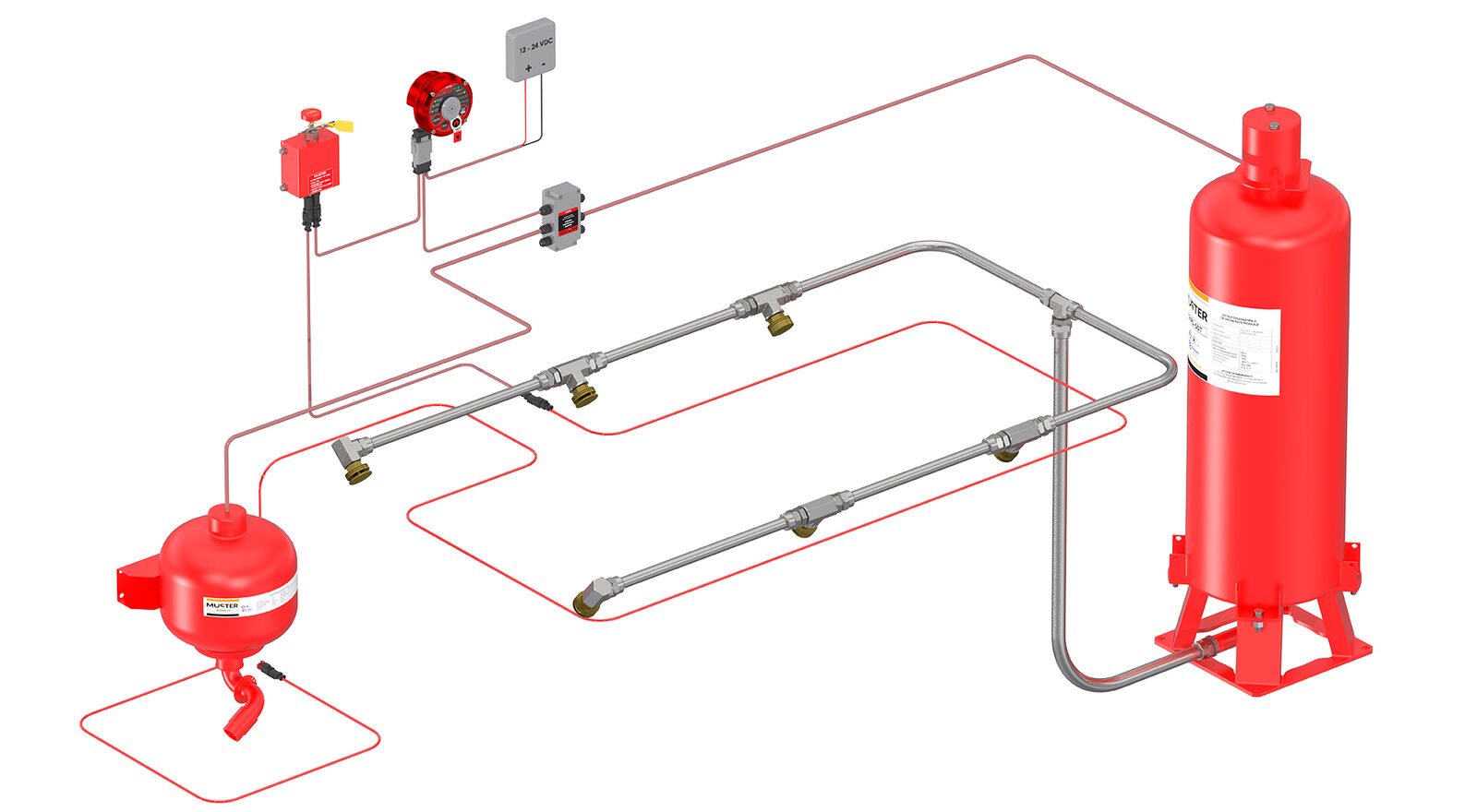
Platform Muster360 System design platform and cloud monitoring tool. Design a system, generate a bill of materials, commission it and monitor it remotely, all in one platform.
Fluorine-free foam (F3) for hydrocarbon liquid fires. Effective smothering to prevent re-ignition on mining and heavy equipment.
Fine water-foam mist for confined engine bays and small-scale mobile machinery. Minimal water uses with rapid heat absorption.
Enclosed electrical compartment protection. No water, no powder. Designed for rapid discharge while minimising contamination, clean-up requirements, and collateral damage to sensitive equipment.
Rapid flame knockdown. Self-generating dry chemical. Can be used standalone or combined with foam or SAG in dual/triple agent configurations.
ABE, CO2 and foam extinguishers with brackets and accessories. Required as a supplementary measure alongside every installed automatic system.
System design platform. Design a system, generate a bill of materials and produce commissioning documentation, all in one platform.
Cloud based accessContact MusterFire directly or find your nearest authorised distributor. Our team can advise on the right suppression system for your equipment, operating environment and compliance obligations.
An automatic fire suppression system is an engineered combination of detection and discharge components that identifies a fire event and releases a suppression agent without requiring human intervention. Detection triggers automatically via linear heat detection cable, spot detectors or pressure sensors.
A traditional sprinkler system uses water and is designed for building fire protection. A fire suppression system for heavy equipment uses engineered agents specifically selected for the type of fire risk on that equipment, and is certified to AS 5062, not building fire standards.
Heavy equipment fires develop in engine bays and hydraulic compartments that operators cannot safely access during a fire event. By the time a fire is visible from outside the machine, it has typically already exceeded the capacity of a portable extinguisher to control.
Linear heat detection cable is installed around the protected risk area. When the cable is exposed to a temperature above its rated activation point, the internal conductors short circuit. This signal triggers the alarm panel, which then activates the discharge valve and releases the suppression agent automatically.
AS 5062:2022 establishes the Australian Standard for fire protection on mobile and transportable equipment. Many mine sites, construction operations and transport contracts now require AS 5062 compliance as a site entry or contract condition.
MusterFire offers four agent types: Fluorine-free foam (F3) for hydrocarbon liquid fires, solid aerosol (SAG) for enclosed electrical compartments, dry chemical impulse powder (IPS) for rapid flame knockdown, and water mist for engine bays and enclosed spaces where minimal water use is required.
With correct maintenance, a MusterFire system can provide reliable protection for the operational life of the machine. Detection cable has a service life that depends on operating conditions; in high-heat environments, replacement may be required at annual or biennial maintenance intervals.
Agent type selection takes into account collateral damage minimisation. SAG systems provide waterless, powder-free suppression with minimal residue. Misting systems use minimal water. Foam-based systems discharge only into the specified protection zones.
Shut down the machine if safe to do so, evacuate all personnel, do not re-start the machine, and contact your authorised MusterFire distributor. The system must be assessed, the fire confirmed as extinguished and the suppression system re-commissioned before the machine returns to service.
AS 5062:2022 is the current Australian Standard for fire protection of mobile and transportable equipment. It covers design, installation, inspection and maintenance of fire suppression systems on heavy equipment. All MusterFire systems are designed to meet this standard.
Muster360 is MusterFire’s digital system design platform, supporting authorised distributors with system design, bill of materials generation, and commissioning documentation.
Yes. Each machine type should have its own fire risk assessment. For the same model as existing assessed equipment, the existing assessment can be applied with minor adjustments. For new machine models, a fresh assessment is required.